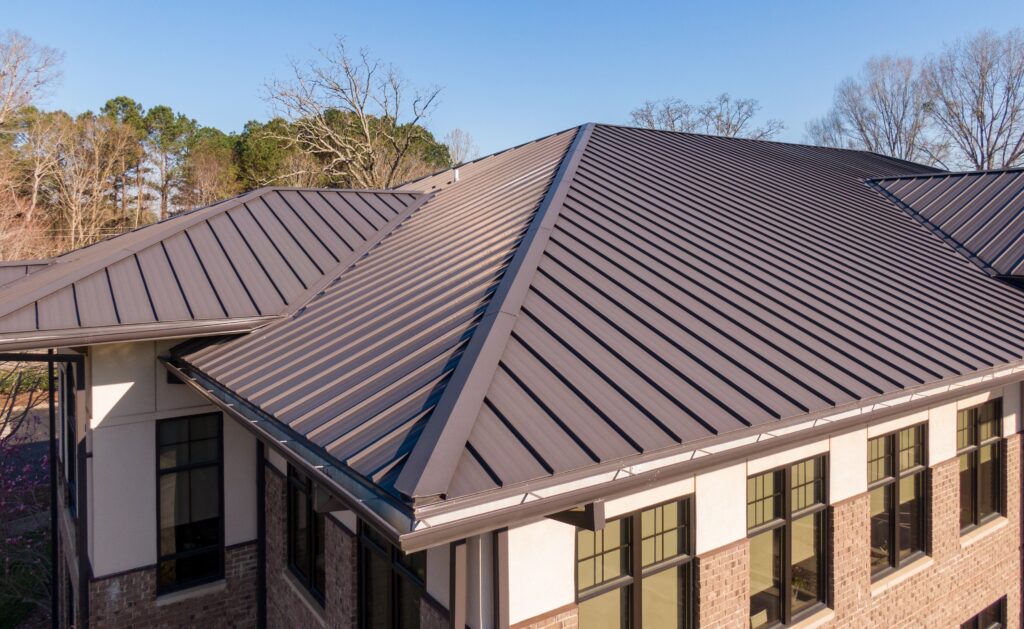
Signs your roof has crossed into replacement
While the conditions under the membrane settle the coat or replace question definitively, there are visible and experiential signs that suggest a Bellwood roof has crossed from coatable into replacement territory. Recognizing them tells you when to stop considering a coating and call for a real assessment.
Leaks in more than one place
An isolated leak can sometimes be repaired and the roof coated, but leaks showing up in several places usually mean the failures are widespread, not local. Multiple leak points across a Hendricks County roof often indicate that moisture has worked into the system broadly, which is a replacement signal rather than a coating one. When the leaks are no longer a single fixable spot, the roof is telling you it is near the end.
A brittle or splitting membrane
Walk an aging roof and a membrane that has gone brittle, that cracks or splits, or that is worn through to the reinforcement, is past what a coating can save. A coating needs a sound surface to bond to and extend, and a disintegrating membrane does not provide one. Visible widespread cracking or splitting on your roof is a strong sign the membrane has reached replacement condition.
Soft or spongy spots underfoot
Areas that feel soft or spongy when walked usually mean wet insulation or a compromised deck beneath, which is a clear replacement signal. These spots indicate moisture has gotten into the assembly, and a coating over them traps the problem. Soft spots on a Bellwood roof are one of the more reliable signs that at least those areas, and possibly the whole roof, need replacement rather than a coating.
A history of repeated patching
A roof that has been patched again and again over the years is often telling you it is at the end of its useful life. Each patch addresses a symptom while the underlying system continues to age, and at some point the patching is just managing a roof that needs replacing. If your Hendricks County roof has a long patch history and the leaks keep coming back, that pattern itself is a replacement signal.
When the signs point to replacement
Several of these signs together, multiple leaks, a brittle membrane, soft spots, and a patching history, make a strong case that the roof has crossed into replacement, and a coating at that point only delays the inevitable while the damage spreads. One sign alone may warrant a closer look rather than a verdict, but the pattern is usually clear. The signs are the prompt to get a real assessment, not to assume a coating will solve it.
Get the signs confirmed
The economics here strongly reward acting on real information. A coating on a qualifying roof is one of the highest return decisions in property maintenance, and a coating on a failing roof is one of the most wasteful, and the two roofs can look identical from the parking lot. That gap is the entire reason the inspection matters so much on a Hendricks County building. Spending a little to know which roof you actually have protects you from a mistake that costs many times the price of finding out, in either direction.
It is worth stressing that the coat or replace decision is not a judgment you have to make on instinct, because the conditions that drive it are measurable. A Bellwood owner who insists on core samples and a moisture scan before deciding is not being overly cautious, they are getting the only information that actually settles the question. The roofs where owners regret their decision are almost always the ones where someone judged the roof from the surface and guessed, rather than confirming what was underneath, which is the part that makes the call reliable.
Finally, remember that a roof's answer can change over time, so the right decision is the one that fits its condition today. A roof that was clearly in the coating window two years ago may have crossed into replacement since, or may still qualify, and only a current look tells you which. A owner who treats the coat or replace question as a current assessment rather than a settled assumption makes the right call at each stage, which is what keeps the spending matched to the roof you actually have right now.
The economics here strongly reward acting on real information. A coating on a qualifying roof is one of the highest return decisions in property maintenance, and a coating on a failing roof is one of the most wasteful, and the two roofs can look identical from the parking lot. That gap is the entire reason the inspection matters so much on a Hendricks County building. Spending a little to know which roof you actually have protects you from a mistake that costs many times the price of finding out, in either direction.
It is worth stressing that the coat or replace decision is not a judgment you have to make on instinct, because the conditions that drive it are measurable. A Bellwood owner who insists on core samples and a moisture scan before deciding is not being overly cautious, they are getting the only information that actually settles the question. The roofs where owners regret their decision are almost always the ones where someone judged the roof from the surface and guessed, rather than confirming what was underneath, which is the part that makes the call reliable.
Finally, remember that a roof's answer can change over time, so the right decision is the one that fits its condition today. A roof that was clearly in the coating window two years ago may have crossed into replacement since, or may still qualify, and only a current look tells you which. A owner who treats the coat or replace question as a current assessment rather than a settled assumption makes the right call at each stage, which is what keeps the spending matched to the roof you actually have right now.
The economics here strongly reward acting on real information. A coating on a qualifying roof is one of the highest return decisions in property maintenance, and a coating on a failing roof is one of the most wasteful, and the two roofs can look identical from the parking lot. That gap is the entire reason the inspection matters so much on a Hendricks County building. Spending a little to know which roof you actually have protects you from a mistake that costs many times the price of finding out, in either direction.
Visible signs point the direction, but core samples confirm it, because the definitive evidence is under the membrane. Bellwood Metal Roofing reads the signs and confirms them with an inspection on your Bellwood roof, then tells you honestly whether a coating still works or replacement is needed. Call {phone} to get a straight answer. Acting on confirmed condition rather than a guess is what separates a smart spend from an expensive one.